
Home / Treatments / Facelift / Process
Face · Process
Facelift – the process step by step
From the first consultation to the final result: here you can see how a facelift is typically prepared, performed and followed up – so that you know what to expect.
A facelift is a procedure that can be planned. If you know the process, you can prepare well and plan the healing time realistically. The following steps show the typical course – your personal process is determined in the consultation.
The process at a glance
- 01a few weeks beforehandPreparation
Consultation, examination, informed consent and planning. Medication and smoking are discussed.
- 02Day of surgeryOperation
Deep plane facelift under general anesthesia; afterwards, generally one to two nights as an inpatient.
- 03weeks to monthsAftercare
Swelling subsides, follow-up checks and suture removal; the final result becomes apparent after a few months.
What happens during the operation
Phase 1: Preparation
- Consultation We discuss your wishes, I examine your skin, tissue and facial proportions and explain what can realistically be achieved.
- Planning We decide whether, for example, the neck, midface or eyelids should also be treated.
- Preliminary examinations Depending on your age and state of health, these include laboratory tests and, if necessary, further examinations.
- Medication Drugs that affect blood clotting are paused temporarily – only after consulting a doctor.
- Smoking Nicotine impairs blood flow and wound healing. If possible, avoid it for a few weeks before and after the operation.
- Informed consent You receive detailed information about the procedure, risks and alternatives – with sufficient time to think it over.
- Organization Plan for someone to accompany you when you are discharged, time off work and help at home during the first few days.
Phase 2: The day of surgery
- Arrival and preparation You arrive with an empty stomach; we discuss any last questions.
- Marking The incision lines and treatment zones are marked on the skin while you are sitting up.
- Anesthesia The facelift is performed under general anesthesia; we decide on the type in advance together with the anesthesia team.
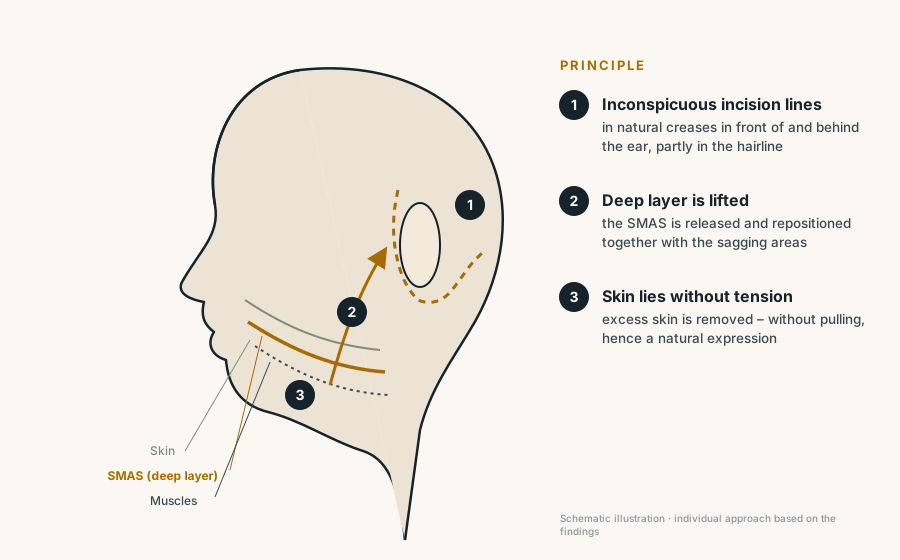
- Procedure Through inconspicuous incisions in front of and behind the ear, the deep tissue layer (SMAS) is released and repositioned together with the sagging areas. Excess skin is removed without tension.
- Dressing and waking up A light head dressing protects the wounds; you are looked after in the recovery room.
- Inpatient stay For a classic facelift, I recommend one to two nights as an inpatient.
Phase 3: Aftercare and healing
- Day 1–2Cooling, upper body raised, wound check, discharge
- Week 1Swelling and bruising are at their peak and then subside; sutures are removed after a few days
- Week 2usually socially presentable again (after 10–14 days); slight swelling can be concealed
- Week 4–6Sports, sauna and intense sun possible again after consultation
- Month 3–6slight swelling has subsided, scars fade – the result has matured
During the first few days, cooling, sleeping with your upper body raised and physical rest help. At the follow-up appointments, I check how healing is progressing and discuss the next step with you.
Contact us immediately if one side swells significantly more than the other, pain suddenly increases, you develop a fever, or a wound weeps or turns red.
Your checklist
- Bring a list of your medications to the consultation
- Start your break from smoking in good time
- Arrange for someone to accompany you when you are discharged
- Have cold compresses and comfortable button-front clothing ready
- Plan two weeks without important public appointments
Frequently asked questions about the process
How long does the operation take?
That depends on the extent – for example, whether the neck or eyelids are also treated. I will tell you the expected duration during planning.
Will I be in severe pain after the facelift?
Most people feel tightness and numbness rather than severe pain. You will be given painkillers to take home.
When can I wash and color my hair again?
Washing your hair is usually possible after a few days; you should wait a few weeks before coloring it. You will receive detailed instructions in writing.
Technique, suitability, risks and all questions