
Home / Treatments / Lipedema
Body
Lipedema – liposuction for diseased fatty tissue
Lipedema is a disease, not a matter of discipline. Liposuction is the only effective method for removing the diseased fatty tissue – and can noticeably relieve symptoms.
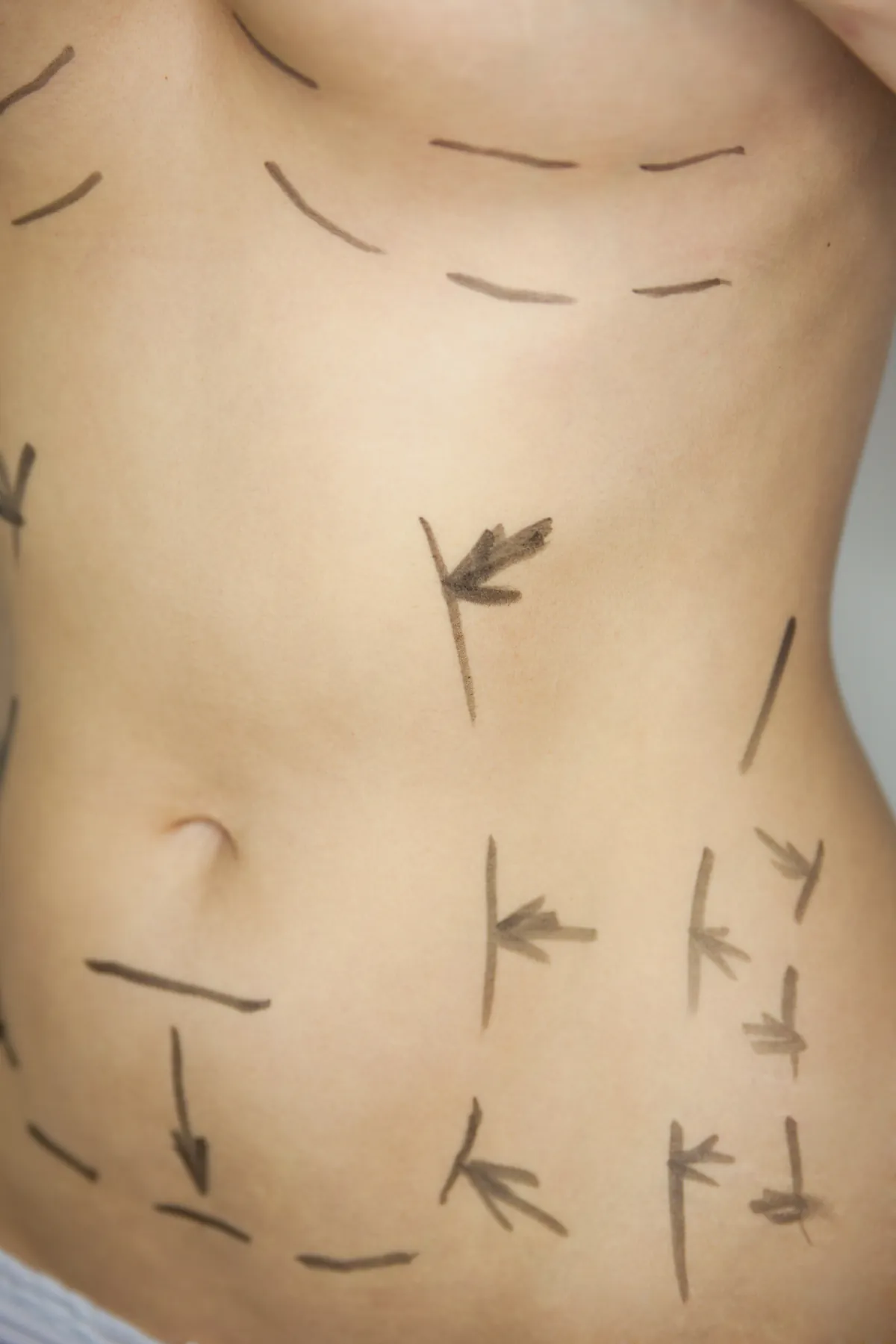
Many women with lipedema have come a long way: diets, exercise, the experience that their legs or arms still do not get slimmer – and often the accusation of not trying hard enough. Yet this is a distinct disease of the fatty tissue.
What is lipedema?
In lipedema, the subcutaneous fatty tissue increases pathologically, typically symmetrically on the legs and hips, and often on the arms as well. The hands and feet are usually spared. Almost exclusively women are affected; the disease often begins in phases of hormonal change such as puberty, pregnancy or menopause.
Typical signs are:
- a disproportion between a slim upper body and noticeably heavier legs or arms
- feelings of tension and pain on pressure in the affected tissue
- a marked tendency to bruise
- a feeling of heaviness that increases over the course of the day
- diet and exercise have hardly any effect on the affected regions
The diagnosis is made by a doctor after an examination. Not every fuller figure is lipedema – and not every case of lipedema needs surgery.
Lipedema, lymphedema or excess weight?
The distinction is important because the treatment differs. Lipedema is not caused by excess weight, but it can be worsened by it. In lymphedema, tissue fluid accumulates; unlike in lipedema, the back of the foot and the toes are often swollen, and the skin over the toes is difficult to lift (Stemmer’s sign). In a pure fat distribution disorder, pain and tenderness to pressure are absent. The diagnosis is based on medical history, examination and palpation findings.
Stages
| Stage | Skin surface | Subcutaneous fatty tissue |
|---|---|---|
| I | smooth | thickened with fine nodules |
| II | uneven, wavy | coarse nodules |
| III | deforming lobes | greatly increased, overhanging |
The stages describe the appearance – not necessarily the severity of the symptoms.
Conservative treatment
Treatment usually begins with conservative therapy: custom-made flat-knit compression garments, manual lymphatic drainage, regular exercise – especially in water –, a stable weight and good skin care. It relieves symptoms but cannot remove the diseased fatty tissue.
Liposuction for lipedema
Liposuction is the only effective method for removing diseased fatty tissue in lipedema. Even during my training, liposuction for medical reasons in lipedema was just as much a part of it as aesthetic procedures.
I work with general anesthesia in combination with tumescent local anesthesia, as well as with vibration techniques and thin cannulas that protect the tissue – and especially the lymphatic vessels. With pronounced findings, it is often advisable to treat in several sessions.
Procedure
- Diagnosis and medical history We talk about your symptoms, previous therapies and your goals.
- Planning I determine which regions are treated in which order – in several steps if necessary.
- Surgery General anesthesia with tumescence, gentle suction with vibration technique.
- Aftercare Compression, lymphatic drainage and regular check-ups.
Coverage of costs
Under certain conditions, liposuction for lipedema can be covered by German statutory health insurance. The rules on this have changed several times in recent years and depend, among other things, on the stage and on prior treatment. For private insurance, the respective policy terms apply. We clarify this on a case-by-case basis – and you submit the application before treatment begins.
Risks
The risks basically correspond to those of liposuction: bruising, seromas, infections, sensory disturbances and unevenness of the skin. With larger volumes, careful monitoring and aftercare are particularly important.
Lipedema treatment: the process step by stepPreparation, day of surgery and healing – with illustrations
Frequently asked questions
Do I have to continue wearing compression after surgery?
Immediately after the procedure, yes, for several weeks. Whether and for how long compression is needed afterwards depends on the findings. Many patients are able to reduce it over time.
Can lipedema come back?
The removed fatty tissue does not grow back. However, lipedema is a chronic disease; it can progress in untreated regions or with hormonal changes.
How many operations are necessary?
That depends on the severity and extent. Legs and arms are often treated in separate sessions.
Is lipedema the same as cellulite?
No. Cellulite is a harmless change in the skin surface. Lipedema is a disease of the fatty tissue with pain and tenderness to pressure.
Can I get rid of lipedema through exercise?
Exercise relieves symptoms and is very important, but as a rule, the pathologically increased fat cells do not disappear as a result.